Why The Open Table exists
The space after crisis should not be a void.
The Open Table Cincy is a peer-run, non-clinical recovery clubhouse and community hub built for the stretch between crisis services and a stable, meaningful life.
Foundational public narrative
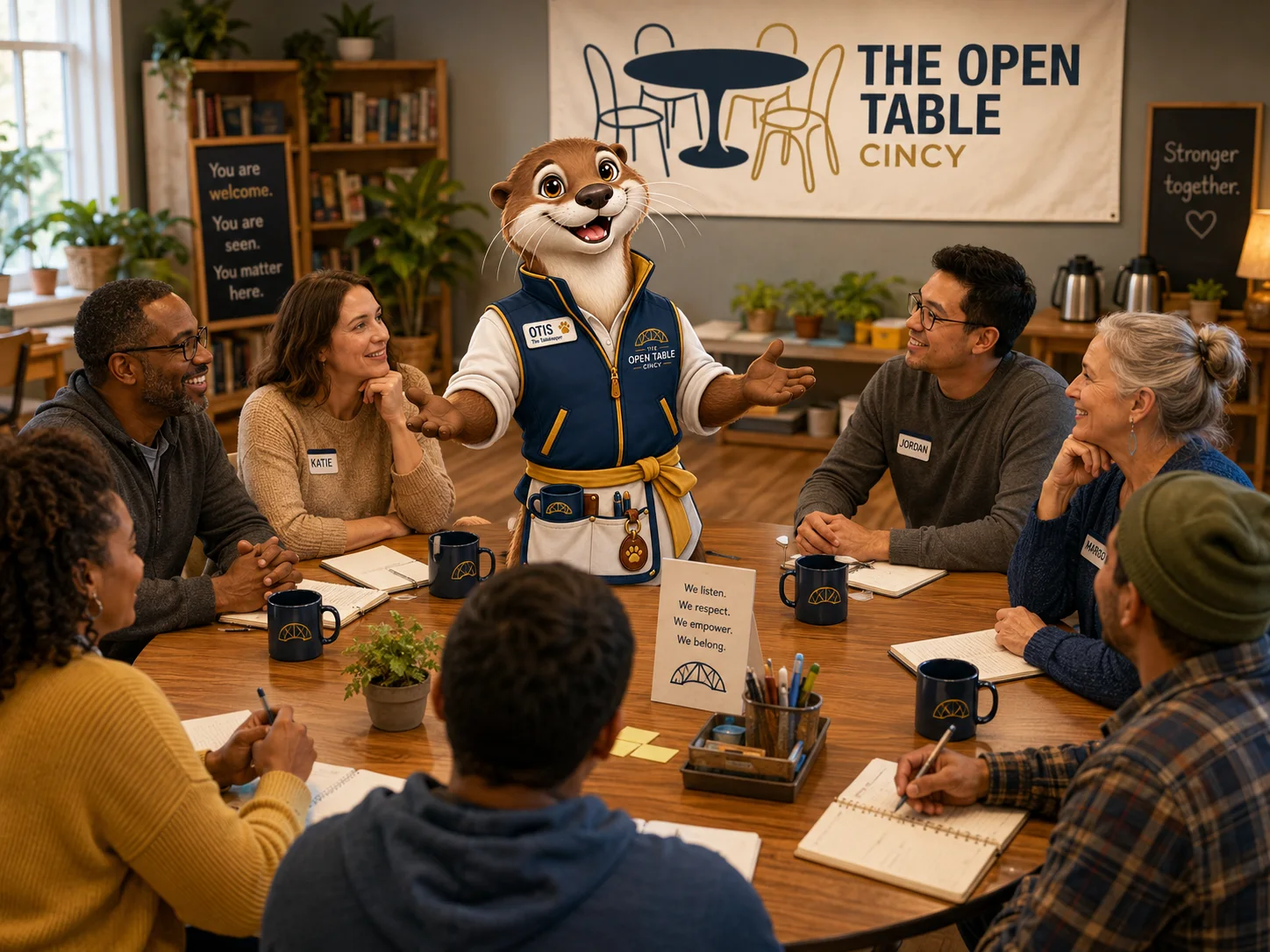 Concept visualization
 The founding problem
People are often discharged from crisis before life is ready to receive them.
A person can complete treatment, leave incarceration, move out of homelessness, or decide to change and still lack the rhythm, relationships, transportation, documents, work history, and practical support needed to remain steady.
The Open Table was created for that gap. We do not replace treatment. We help people remain connected to daily life after treatment, referral, or crisis.
Our operating identity
Not a waiting room. A place to build.
Belonging
Members enter a community where their presence matters and unexplained absence is noticed.
Structure
A Work-Ordered Day replaces passive time with real roles, routines, and closeout.
Contribution
People build confidence by becoming useful, practicing repair, and producing visible work.
Opportunity
Workforce, enterprise, and partnership pathways turn internal growth into portable proof.
Scope guardrails
What we are — and what we refuse to pretend to be.
The Open Table is
- A peer-run recovery clubhouse and community hub
- A structured Work-Ordered Day environment
- A closed-loop referral and re-engagement system
- A bridge into workforce development and community contribution
- A mission-aligned enterprise ecosystem
The Open Table is not
- A psychotherapy clinic, detox program, or medication-management site
- An unstructured drop-in room
- A restaurant disguised as a mission
- A staffing agency or résumé mill
- A guarantee of housing, employment, treatment, or sobriety
Official values
The architecture underneath the welcome.
Belonging
People recover better when they are known, expected, and needed.
Structure
Love becomes durable when it has rhythm, boundaries, roles, and expectations.
Reliability
Recovery becomes visible through showing up, following through, and repairing what breaks.
Dignity
No one is reduced to a diagnosis, addiction history, poverty, or a case file.
Truth
We tell the truth in our culture, documentation, money, outcomes, and public claims.
Service
Recovery grows as people move from receiving help toward becoming helpful.
Excellence
Peer-led does not mean loose. The work should be disciplined and reviewable.
Stewardship
Resources, food, grants, relationships, time, and trust are handled with care.
The table is set against abandonment.
Members, families, partners, employers, donors, and neighbors all have a place in the build.