
Lane A • The heart of the model
Belonging becomes a daily practice.
The peer clubhouse is the front door: a structured, non-clinical community where members build rhythm, relationships, reliability, and recovery capital side by side.
Phased activation
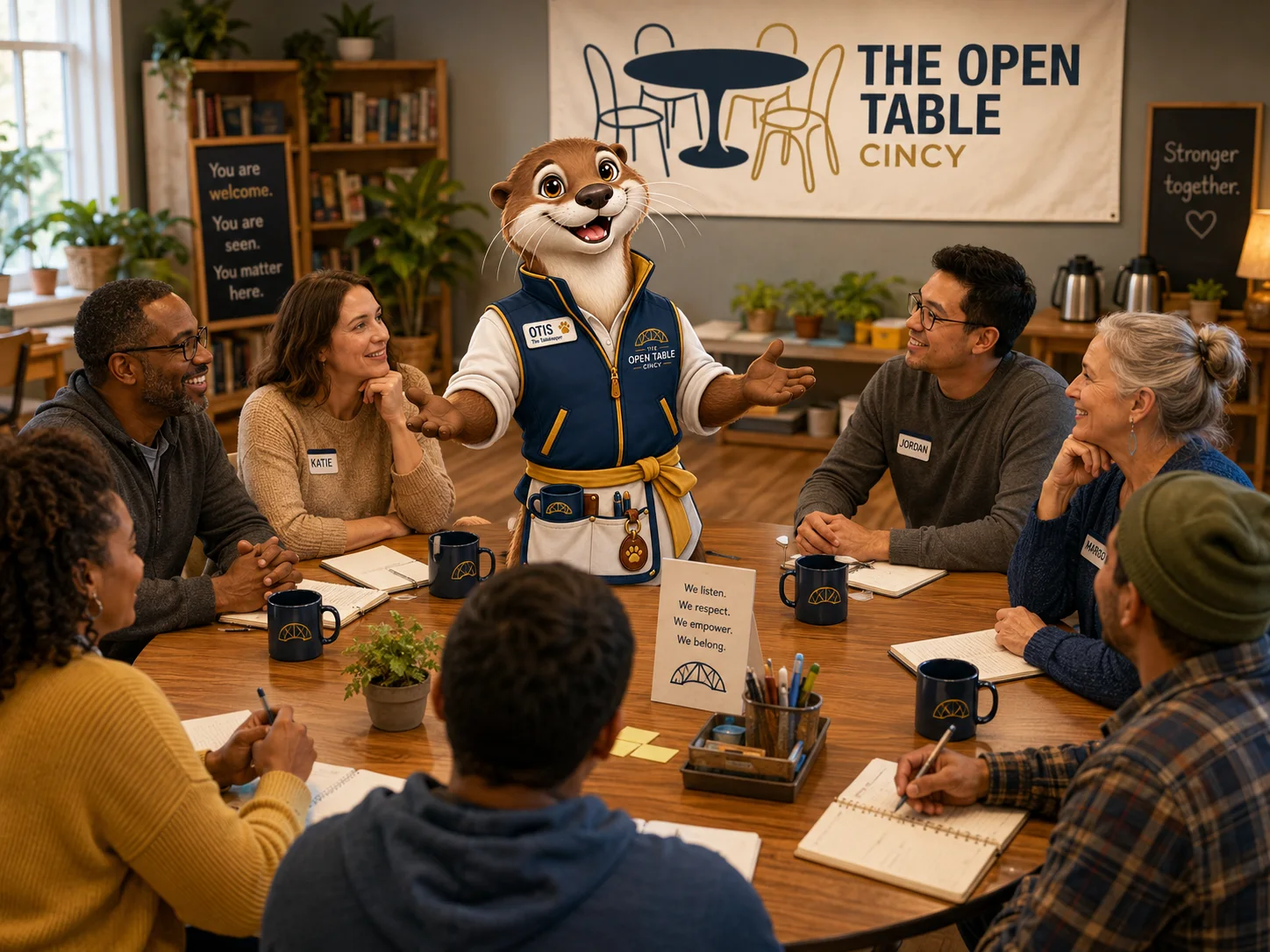 Concept visualization
 The clubhouse promise
Low barrier does not mean low standard.
Members are welcomed without being reduced to paperwork, but the environment is not passive. Everyone is invited into contribution, shared responsibility, and visible next steps.
Belonging without expectations becomes drift. Expectations without belonging become punishment. The clubhouse is built to hold both.
A typical day
The Work-Ordered Day
Welcome and orientation
A soft landing, clear expectations, and an immediate next step instead of hovering in confusion.
Morning huddle
Attendance, announcements, unit needs, daily commitments, and assignments.
Unit work
Hospitality, outreach, resource navigation, facilities, food preparation, administration, media, or other real organizational work.
Shared table rhythm
Food, conversation, regulation, and the ordinary human work of being with people.
Skill and recovery practice
BRAVE-20 behaviors, communication, boundaries, reliability, emotional regulation, and role practice.
Closeout
Task sign-off, reflection, documentation, repair, and ownership of the next step.
What members build
Recovery capital that can carry weight.
Internal capacity
Regulation, confidence, boundaries, truth, accountability, and the ability to tolerate ordinary discomfort.
Social capacity
Healthy relationships, help-seeking, repair after conflict, community participation, and mutual support.
Practical capacity
Documents, transportation plans, housing navigation, benefits access, schedules, and a reliable daily routine.
Work capacity
Attendance, task completion, accepting feedback, pace, teamwork, communication, and proof of readiness.
Civic capacity
Service, leadership, neighborhood connection, advocacy, and contribution beyond the program.
Future capacity
A visible path from member to contributor, trainee, candidate, worker, graduate, and mentor.
No-drop engagement
A referral is not complete because someone received a phone number. First contact, outreach attempts, next steps, warm handoffs, dispositions, and re-engagement are documented until the loop is closed or the person is safely referred elsewhere.
Start with one day, one role, one next step.
The clubhouse is designed to make the first return possible and the second return easier.