A letter from Michael Collins
A table set against abandonment.
The Open Table began as a conviction that people deserve more than crisis stabilization followed by a lonely return to the same conditions that nearly broke them.
Founder narrative
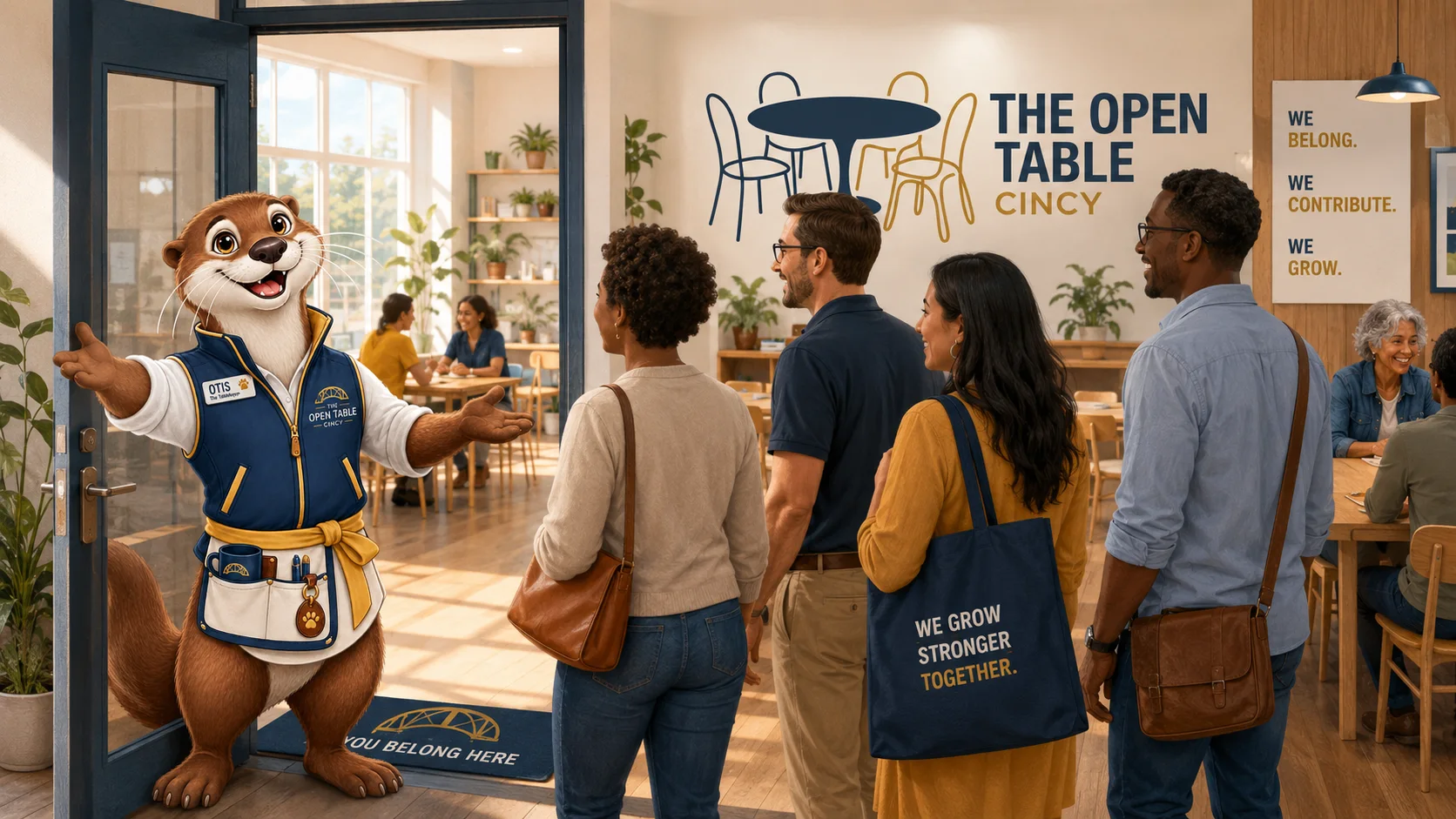 Concept visualization
 Where the vision began
Coordinated care taught me that no single department carries a whole life.
Early in my career, work on an Assertive Community Treatment team showed me what happens when housing, benefits, clinical care, nursing, psychiatry, justice involvement, and practical navigation are not treated as unrelated problems. People did better when the team saw the whole picture and someone owned the next step.
The Open Table is a non-clinical, peer-run translation of that insight. It is not an ACT team and not a clinic. It is a place where community, practical coordination, daily structure, workforce preparation, and belonging are organized around the person instead of expecting the person to organize a broken system.
Love has to take organizational form. Otherwise, it remains a beautiful feeling that cannot carry a person across Tuesday morning.
The vision in practice
What I want people to experience here.
A real welcome
A place where someone can enter before their life is perfectly organized and still be treated with dignity.
A daily rhythm
A structure strong enough to carry people on the days when motivation, confidence, and hope are temporarily thin.
A chance to contribute
Work, hospitality, creativity, service, and leadership that allow recovery to become visible as capacity.
A bridge forward
Practical support and workforce pathways that help opportunity arrive with preparation and remain with support.
Faith and public service
The Christian conviction is present in the posture—not imposed as an entry requirement.
My faith shapes the belief that every person carries dignity, that service is sacred, that truth matters, and that a table can become a place of restoration. It should be visible in how we welcome, forgive, repair, steward resources, and refuse to abandon people.
Access to public services and community participation must remain neutral, open, and respectful. No person should have to share my theology to receive dignity, information, a referral, a meal, or a chance to rebuild.
The dream is not to build a program people stay in forever.
The dream is to build a community strong enough to help people move into contribution, work, leadership, family, neighborhood life, and the next right level of support.
This vision becomes real through disciplined relationships.
Bring a referral pathway, a job, a meal commitment, a training need, a housing connection, a volunteer skill, or a source of accountable support.