
Training, competency, and staff development
A workforce academy built around observable practice.
The Open Table Workforce Academy supports members, peer workers, and partner organizations with role-bounded training, competency review, documentation discipline, supervision support, and a clear path from learning to demonstrated readiness.
Training pathways in development
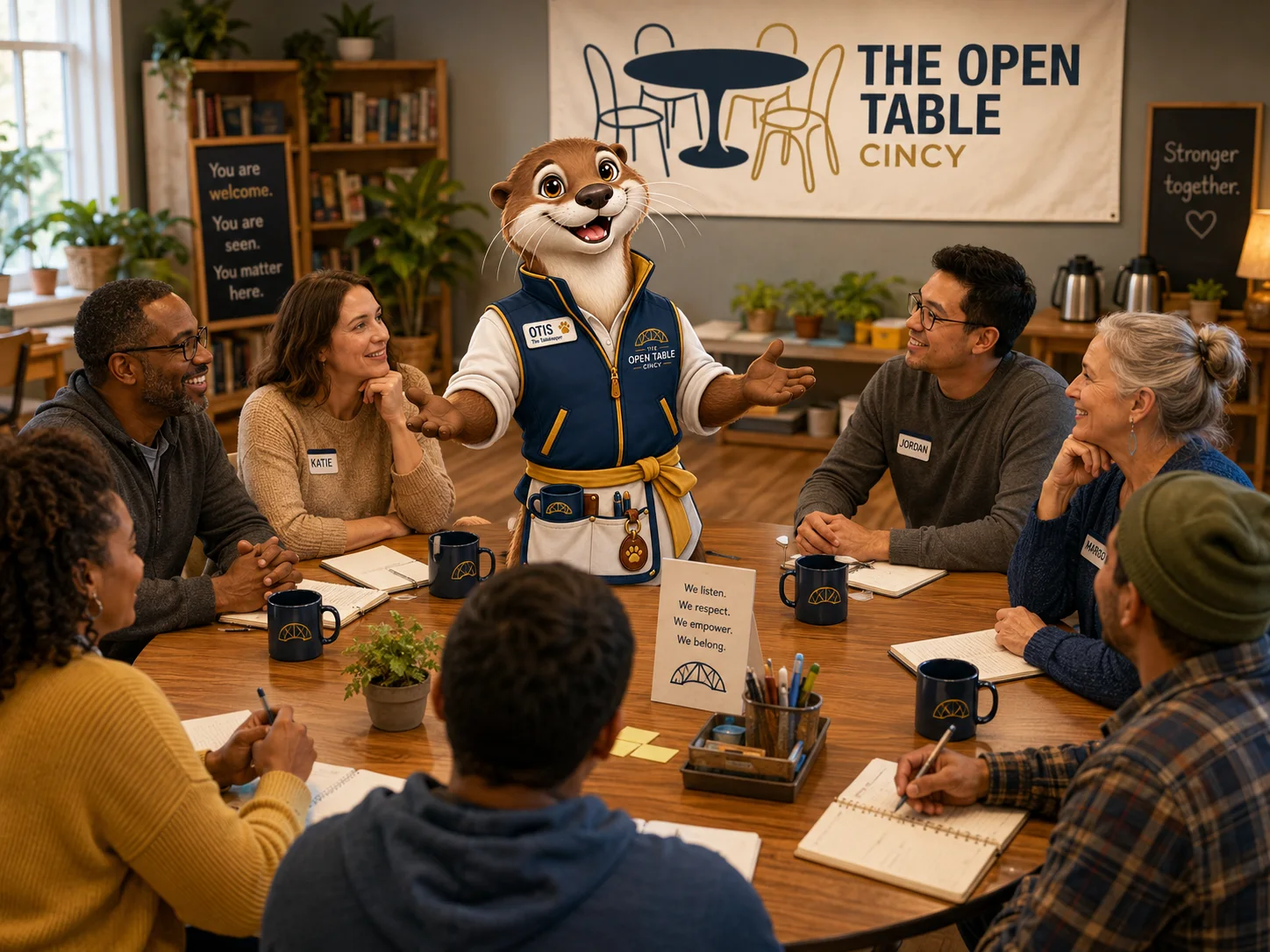 Concept visualization
 Four distinct tracks
One academy, clearly separated audiences.
Member workforce pathway
Reliability, work behavior, digital literacy, role practice, interview preparation, and portfolio building.
Peer workforce development
Lived-experience ethics, mutuality, documentation, boundaries, warm handoffs, supervision, and credential readiness.
Partner staff training
Onboarding, documentation, ethics, de-escalation, group support, case management basics, quality readiness, and supervisor development.
Enterprise practice
Kitchen, hospitality, media, inventory, customer service, facilities, and production practice tied to competency rubrics.
The learning standard
A certificate is not the same thing as competence.
Attendance can show exposure. It cannot, by itself, prove that a person can perform the task, protect a boundary, document the work, receive correction, or respond safely under pressure.
The Academy uses instruction, observation, coached repetition, work samples, sign-offs, and remediation. Readiness is released only when the evidence matches the claim.
Core training domains
What partner and peer learners may study.
Orientation and role clarity
Mission, values, lane boundaries, job expectations, confidentiality, documentation, and escalation.
Golden Thread documentation
Connecting assessment, meaning, goals, interventions, evidence, review, and transition without writing fiction.
Ethics and boundaries
Scope, dual relationships, gifts, social media, story protection, peer drift, and professional communication.
Crisis and de-escalation
Recognizing warning signs, staying within role, reducing spectacle, activating emergency partners, and documenting facts.
Supervision and quality
Reflective supervision, operational supervision, competency review, feedback, corrective action, and trend monitoring.
Workplace readiness
Punctuality, conflict repair, communication, task completion, accepting correction, documentation basics, and retention.
Claim discipline
What we can say — and what we cannot say yet.
Appropriate public language
- Built using CARF- and OhioMHAS-aligned quality expectations
- Competency-based and evidence-informed training
- Designed for peer, recovery, housing, hospitality, and community roles
- Training and workforce development services
- Readiness support for organizations pursuing stronger quality systems
Language requiring formal authority
- Accredited training institute
- Approved continuing-education provider
- State-certified credential program
- Guaranteed employment or credential outcome
- Clinical training delivered outside the trainer's scope or without required approvals
Training inquiry
Describe the staff, peer, or workforce problem you need the Academy to help solve.
A training engagement is not complete at the proposal stage. Scope, owner, dates, audience, deliverables, proof, and follow-up must be confirmed.