
Meet the mascot
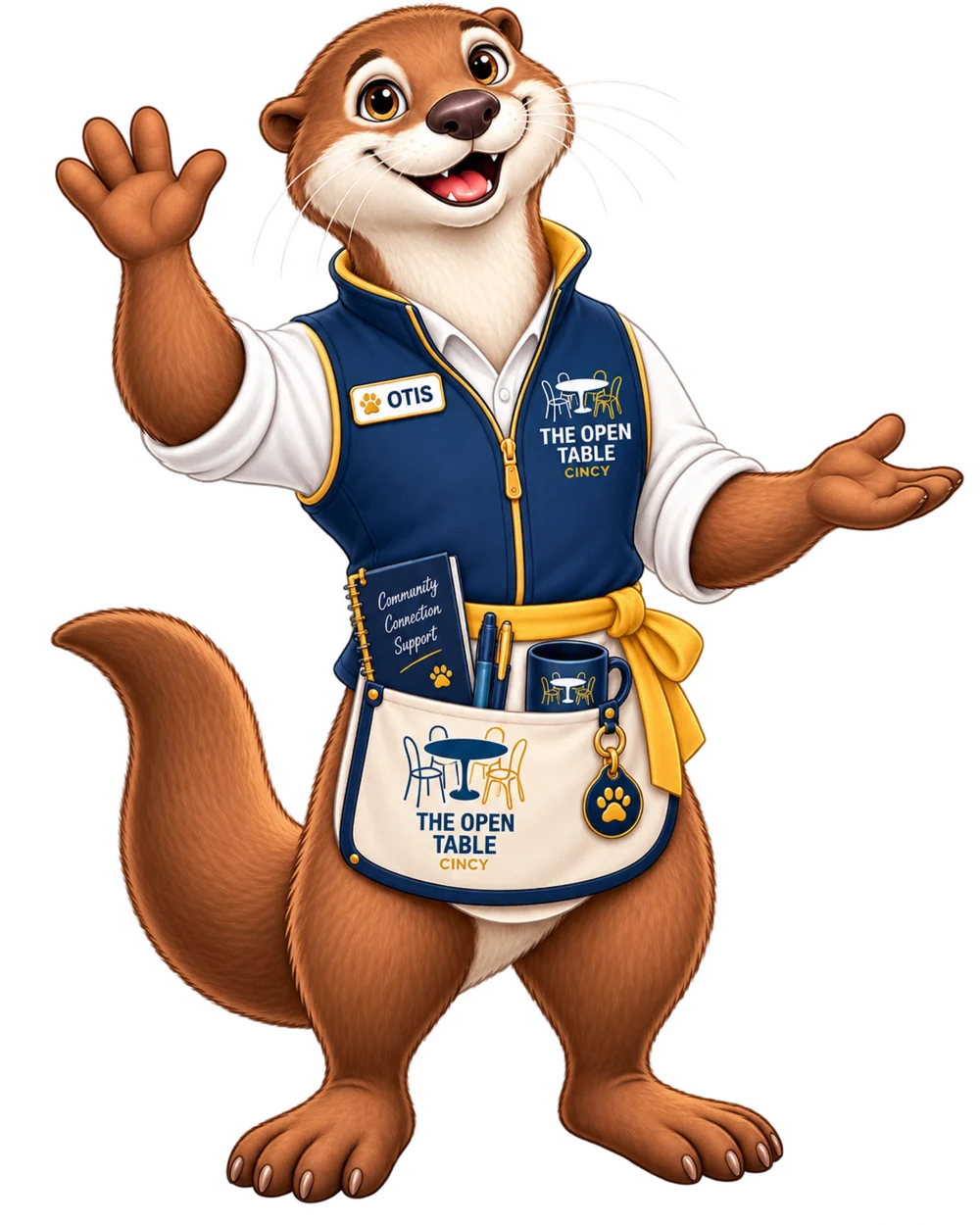
Otis is the invitation to pull up a chair.
Otis turns the Open Table promise into a friendly visual guide: welcoming without being childish, hopeful without pretending the work is easy, and always pointing toward the next concrete step.
Mascot and brand guide
 Concept visualization
 The character
A table with a little motion in its legs.
Concept visualization
Otis carries the visual DNA of the Open Table logo: a shared table, room for more than one kind of chair, deep blue structure, warm gold welcome, and enough personality to make a hard page feel easier to enter.
He may appear in website wayfinding, Help Hub prompts, youth-safe public education, event signage, onboarding cards, social media, and campaign artwork. His job is to invite, orient, and encourage—not to turn recovery into a cartoon.
Concept imagery illustrates the intended environment and program experience; it is not a photograph of an identified member or proof that every pictured service is currently operating.
What Otis stands for
The mascot carries the operating values.
Pull up a chair
Belonging begins before performance. A person can enter without already knowing how to stay.
Bring something to the table
Every member has capacity, perspective, labor, creativity, or care that can contribute to the house.
Keep the table steady
Structure, boundaries, truth, safety, and reliability make welcome sustainable.
Make room for the next person
Recovery matures into service, mentorship, partnership, leadership, and community contribution.
Mascot boundaries
Warmth needs brand discipline too.
Good uses
- Wayfinding and friendly calls to action
- Explaining Help Hub tools and simple planning steps
- Welcoming people at events and public pages
- Illustrating values, units, and member pathways
- Merchandise or campaigns approved through brand review
- Age-appropriate, dignity-first public education
Do not use Otis to
- Represent a crisis counselor or emergency responder
- Give medical, legal, clinical, or employment advice
- Make fun of relapse, poverty, trauma, incarceration, or mental illness
- Pressure people to donate or disclose personal stories
- Imply that a planned service is already operating
- Replace approved logos, disclosures, or human contact information
A visual host across the whole house
Otis helps different pages feel like one community.
 Concept visualization
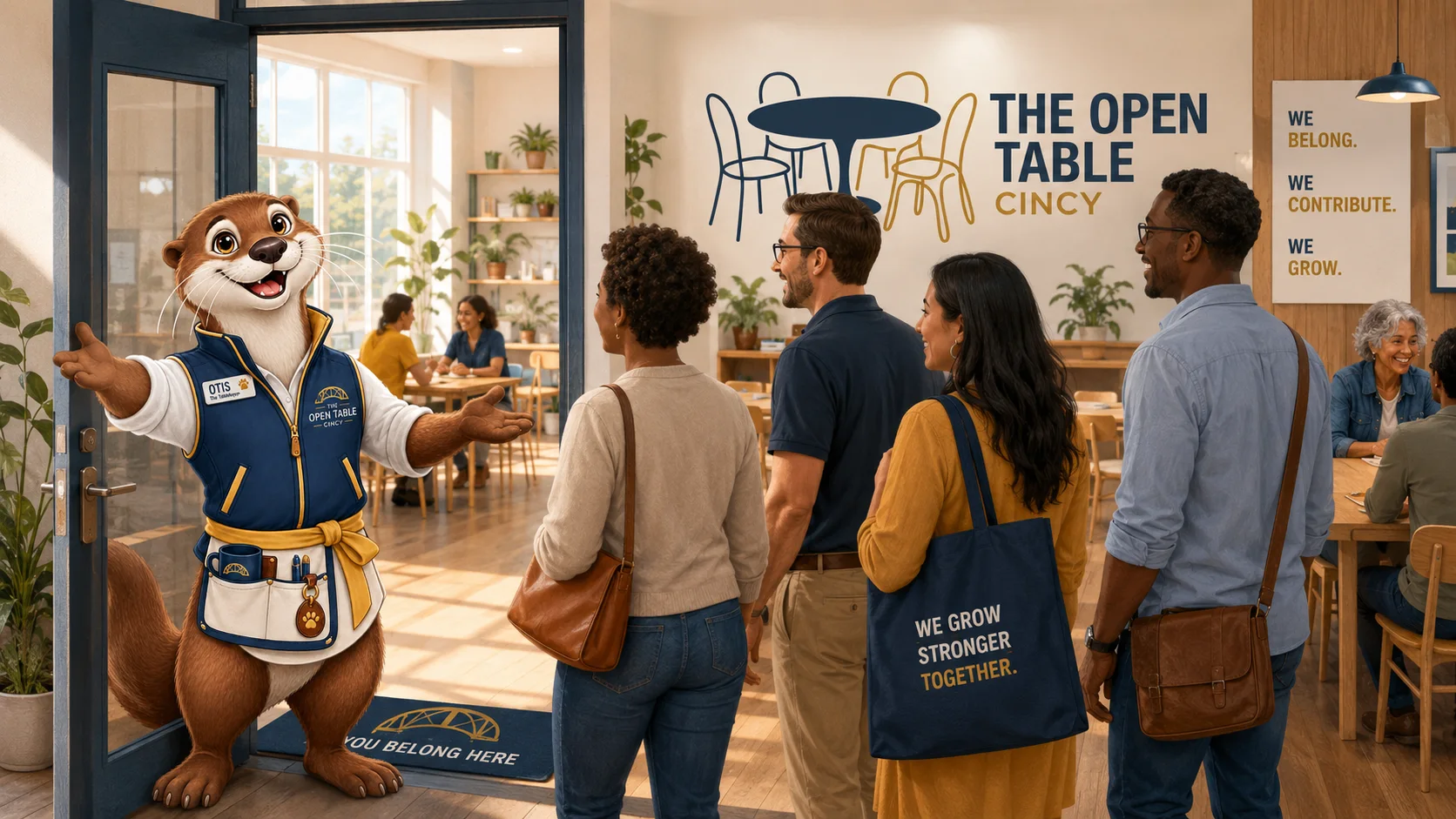
At the doorway
A warm invitation into belonging, orientation, and the next useful step.
 Concept visualization
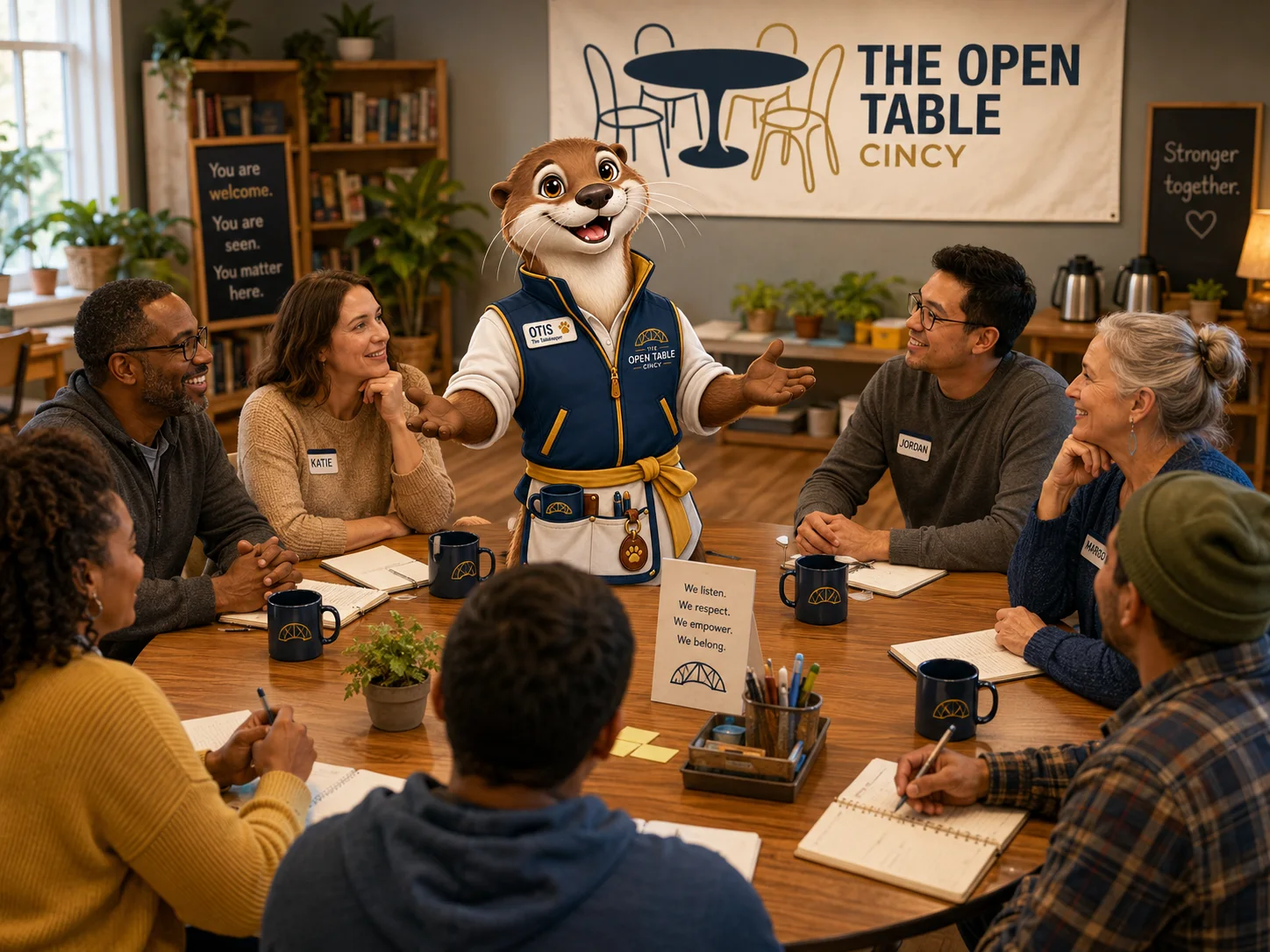
At the table
A reminder that voice, listening, structure, and shared responsibility belong together.
 Concept visualization
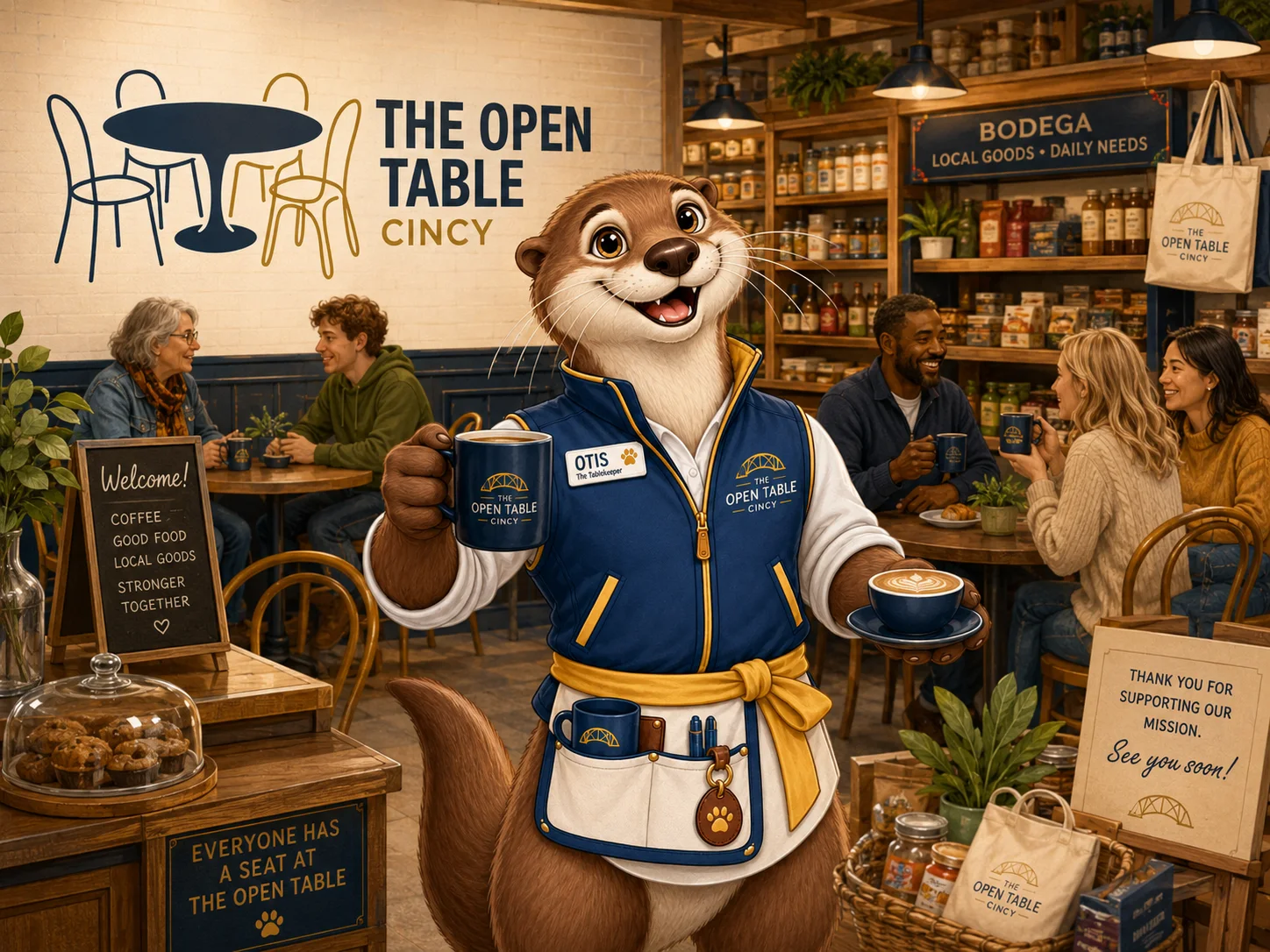
In the enterprise
Hospitality, local goods, food, and work are extensions of the mission—not replacements for it.
Otis is not the hero of the story. The person who pulls up a chair and tries again is.