
Lane C • Recovery-to-career pathway
Readiness before placement. Retention after the hire.
Open Table Works translates peer-supported stabilization and demonstrated reliability into portable proof, vetted employment opportunities, and support that continues after the first day on the job.
Phased workforce build
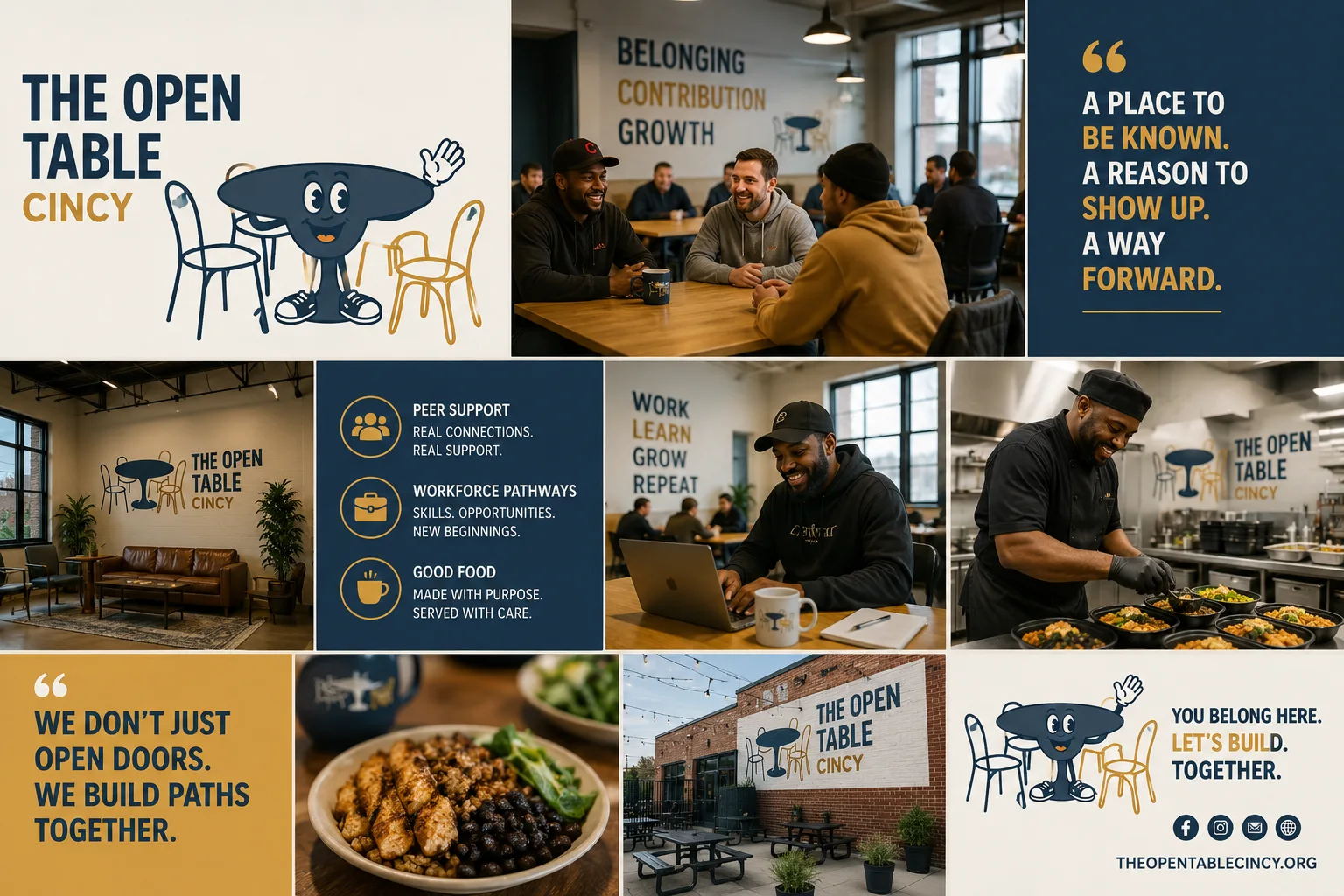 Concept visualization
 The workforce thesis
Placement without support is a delayed crisis.
Anybody can get a job on a good day. Keeping a job requires regulation, communication, structure, transportation, documents, and a support system strong enough to absorb life's shocks.
Open Table Works is not a résumé-only service. Members advance through observable behavior, repeated demonstration, and a documented portfolio that an employer can trust.
The four layers
What readiness actually requires.
Stability
Attendance, regulation under mild correction, communication, and an active plan for housing and transportation barriers.
Skill
Foundational and role-specific competencies demonstrated in clubhouse units or supervised enterprise practice.
Proof
Attendance summaries, competency sign-offs, credentials, references, work samples, a transportation plan, and mock interview results.
Support
A coach, employer communication boundaries, early-warning response, and a save-the-job protocol when drift begins.
The movement sequence
From participation to durable employment.
Orientation
See the pathway, understand rights and responsibilities, and identify immediate barriers.
Readiness review
Assess attendance, communication, regulation, documents, transportation, and pathway fit.
Action plan
Name the missing receipts, responsible people, due dates, and practice field.
Proof-building
Complete curriculum, practice skills, repair mistakes, and create role-specific work evidence.
Portfolio clearance
A formal review confirms that the evidence is complete enough for external representation.
Employer match
Candidates are matched only to vetted roles and supervisors that fit the person's readiness and goals.
Verified start
A placement is counted only when the job start is confirmed by source documentation.
Retention and advancement
Structured support continues through the 30-, 60-, and 90-day windows and beyond as needed.
Grace with standards
We separate a barrier from a behavior deficit.
Barrier issue
- Transportation failure
- Housing instability
- Document loss
- Childcare disruption
- Phone or internet loss
- A pay-cycle gap or other short-term logistical crisis
Behavior deficit
- Failure to communicate
- Repeated no-call/no-show behavior
- Refusal of accountability
- Dishonesty in a readiness record
- Aggression, intimidation, or serious boundary violations
- Expecting staff to manufacture proof that was not earned
Portable proof
What may be included in a placement clearance portfolio.
Identity and onboarding
Vital document checklist, onboarding readiness, contact reliability, and a transportation plan.
Work history or substitute proof
A résumé, work-history summary, supervised unit receipts, samples, references, and direct-observation sign-offs.
Behavioral reliability
Attendance summary, communication evidence, correction-and-repair history, and readiness review.
Credentials
Food safety, OSHA, peer support, customer service, digital literacy, or other pathway-specific credentials as applicable.
Interview readiness
Mock interview rubric, role-play evidence, employer conduct expectations, and a crisis communication plan.
Retention plan
Early warning signs, support contacts, employer communication permissions, and a save-the-job plan.
Start a workforce conversation
Tell us whether you are a candidate, employer, training partner, or referral source.
Do not submit diagnoses, treatment histories, Social Security numbers, or other sensitive clinical information through this website form.